Power Electronics
Inverter
Practice questions from Inverter.
39
Total0
Attempted0
Correct0
IncorrectThe 3-phase modulating waveforms and , used in sinusoidal PWM in a Voltage Source Inverter (VSI) are





where is the fundamental frequency. The modulating waveforms are compared with a 10 kHz triangular carrier whose magnitude varies between +1 and -1. The VSI has a DC link voltage of 600 V and feeds a star connected motor. The per phase fundamental RMS motor voltage, in volts, is closest to

Explanation Locked!
Unlock this branch to view the explanation, track, bookmark and more.
Sign in to UnlockA single-phase full bridge voltage source inverter (VSI) feeds a purely inductive load. The inverter output voltage is a square wave in conduction mode. The fundamental frequency of the output voltage is 50 Hz. If the DC input voltage of the inverter is 100 V and the value of the load inductance is 20mH, the peak-to peak load current in amperes is ________ (rounded off to the nearest integer).

Explanation Locked!
Unlock this branch to view the explanation, track, bookmark and more.
Sign in to UnlockConsider an ideal full-bridge single-phase DC-AC inverter with a DC bus voltage magnitude of 1000 V. The inverter output voltage 𝑣(𝑡) shown below, is obtained when diagonal switches of the inverter are switched with 50% duty cycle. The inverter feeds a load with a sinusoidal current given by, , where . The active power, in watts, delivered to the load is _________. (round off to nearest integer)


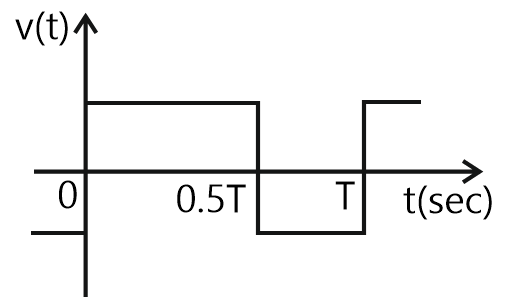
Explanation Locked!
Unlock this branch to view the explanation, track, bookmark and more.
Sign in to UnlockA 3-phase grid-connected voltage source converter with DC link voltage of 1000 V is switched using sinusoidal Pulse Width Modulation (PWM) technique. If the grid phase current is 10 A and the 3-phase complex power supplied by the converter is given by (−4000 − 𝑗3000) VA, then the modulation index used in sinusoidal PWM is ___________. (round off to two decimal places)
Explanation Locked!
Unlock this branch to view the explanation, track, bookmark and more.
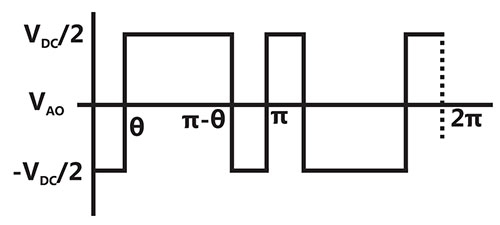
Sign in to UnlockA single-phase full-bridge inverter fed by a 325 V DC produces a symmetric quasi-square waveform across ‘ab’ as shown. To achieve a modulation index of 0.8, the angle 0 expressed in degrees should be ________. (Round off to 2 decimal places.)
(Modulation index is defined as the ratio of the peak of the fundamental component of to the applied DC value.)

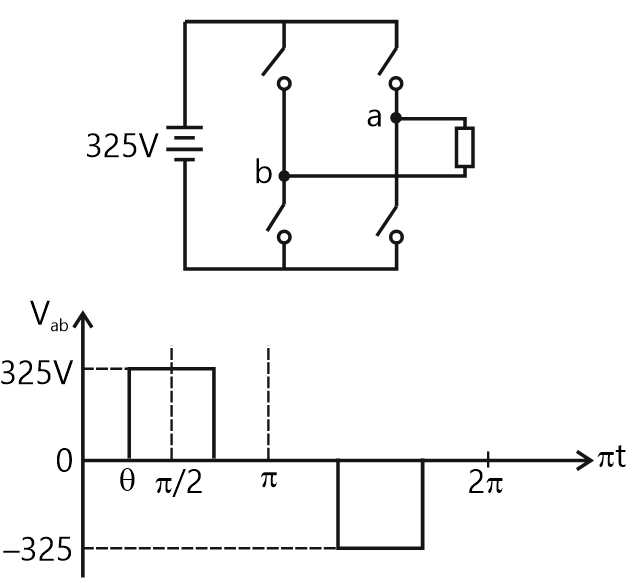
Explanation Locked!
Unlock this branch to view the explanation, track, bookmark and more.
Sign in to UnlockA single-phase inverter is fed from a 100 V dc source and is controlled using a quasi-square wave modulation scheme to produce an output waveform, v(t) as shown. The angle σ is adjusted to entirely eliminate the harmonic component from the output voltage. Under this condition for v(t), the magnitude of the harmonic component as a percentage of the magnitude of the fundamental component is _________. (rounded off to 2 decimal places).


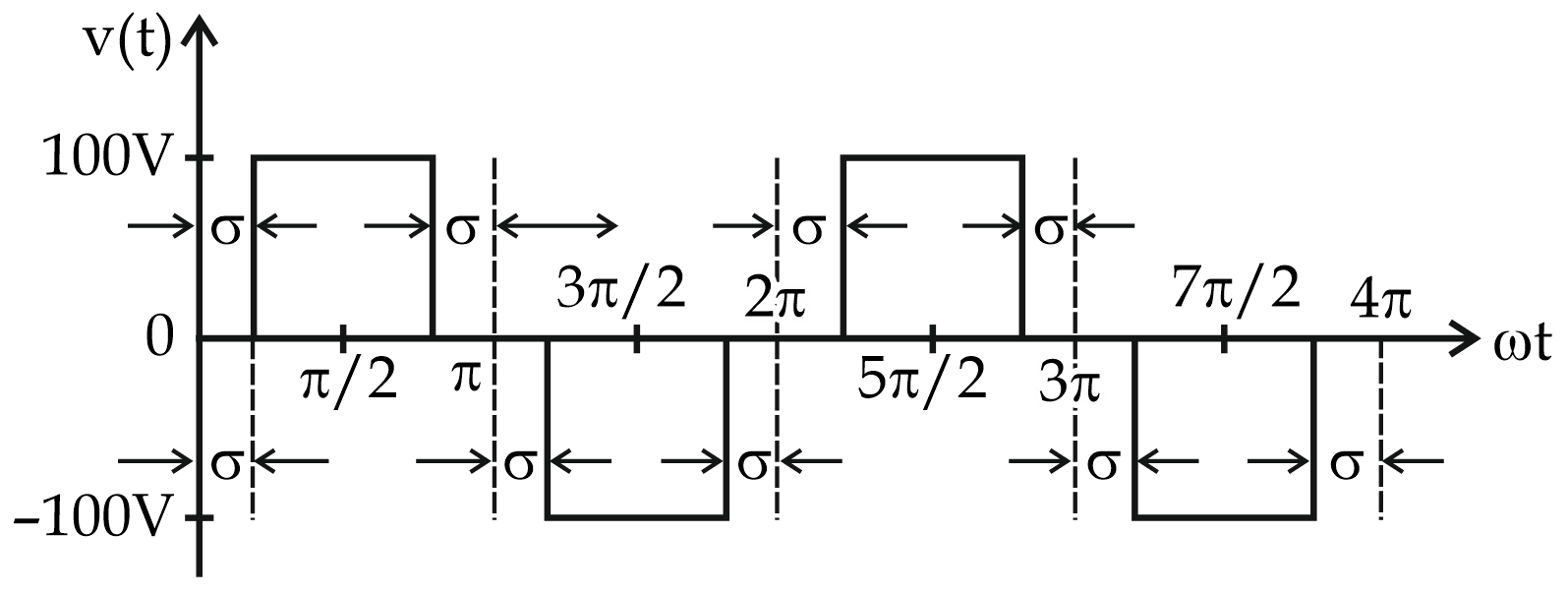
Explanation Locked!
Unlock this branch to view the explanation, track, bookmark and more.
Sign in to UnlockThe output voltage of a single-phase full bridge voltage source inverter is controlled by unipolar PWM with one pulse per half cycle. For the fundamental rms component of output voltage to be 75% of DC voltage, the required pulse width in degrees (round off up to one decimal place) is _____________.
Explanation Locked!
Unlock this branch to view the explanation, track, bookmark and more.
Sign in to UnlockA 3-phase voltage source inverter is supplied from a 600V DC source as shown in the figure below. For a star connected resistive load of per phase, the load power for 120° device conduction, in kW, is ___________.

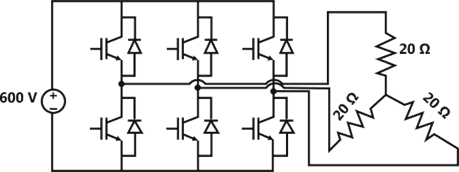
Explanation Locked!
Unlock this branch to view the explanation, track, bookmark and more.
Sign in to UnlockIn the converter circuit shown below, the switches are controlled such that the load voltage is a 400 Hz square wave.

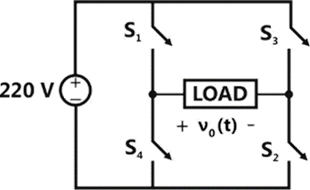
The RMS value of the fundamental component of in volts is ______________.
Explanation Locked!
Unlock this branch to view the explanation, track, bookmark and more.
Sign in to UnlockA three-phase voltage source inverter with ideal devices operating in 180° conduction mode is feeding a balanced star-connected resistive load. The DC voltage input is . The peak of the fundamental component of the phase voltage is





Explanation Locked!
Unlock this branch to view the explanation, track, bookmark and more.
Sign in to UnlockThe figure below shows a half-bridge voltage source inverter supplying an RL-load with and . The desired fundamental frequency of the load voltage is 50 Hz. The switch control signals of the converter are generated using sinusoidal pulse width modulation with modulation index, . At 50 Hz, the RL-load draws an active power of 1.44 kW. The value of DC source voltage in volts is




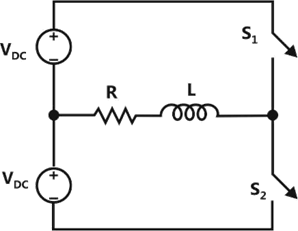

500


Explanation Locked!
Unlock this branch to view the explanation, track, bookmark and more.
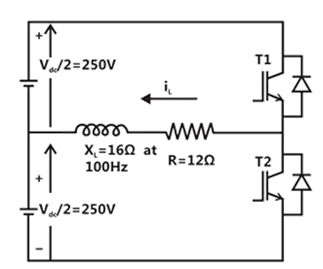
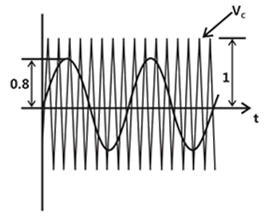
Sign in to UnlockThe switches T1 and T2 in figure
(a) are switched in a complementary fashion with sinusoidal pulse width modulation technique. The modulating voltage and the triangular carrier voltage are as shown in figure


(b). The carrier frequency is 5kHz. The peak value of the 100Hz component of the load current , in ampere, is _______________.

Explanation Locked!
Unlock this branch to view the explanation, track, bookmark and more.
Sign in to UnlockA single-phase full-bridge voltage source inverter (VSI) is fed from a 300V battery, A pulse of duration is used to trigger the appropriate devices in each half-cycle. The rms value of the fundamental component of the output voltage, in volts, is

Explanation Locked!
Unlock this branch to view the explanation, track, bookmark and more.
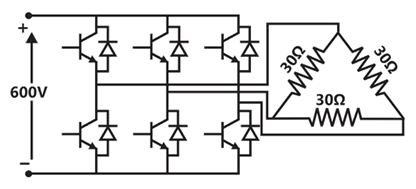
Sign in to UnlockA three-phase voltage source inverter (VSI) as shown in the figure is feeding a delta connected resistive load of /phase. If it is fed from a 600V battery, with conduction of solid-state devices, the power consumed by the load, in kW, is_____________.


Explanation Locked!
Unlock this branch to view the explanation, track, bookmark and more.
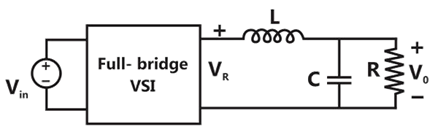
Sign in to UnlockThe single-phase full-bridge voltage inverter (VSI), shown in figure, has an output frequency of 50 Hz. It uses unipolar pulse width modulation with switching frequency of 50 kHz and modulation index of 0.7. For , L = 9.55 mH, C = 63.66 , R = 5Ω, the amplitude of the fundamental component in the output voltage (in Volt) under steady-state is __________________.



Explanation Locked!
Unlock this branch to view the explanation, track, bookmark and more.
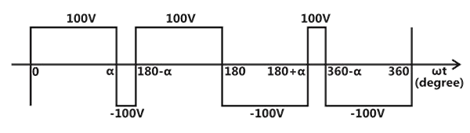
Sign in to UnlockThe figure shows one period of the output voltage of an inverter. should be chosen such that . If rms value of the fundamental component is 50V, then in degree is ____________


Explanation Locked!
Unlock this branch to view the explanation, track, bookmark and more.
Sign in to UnlockA single-phase voltage source inverter shown in figure feeding power to a load. The triggering pulses of the devices are also shown in the figure.
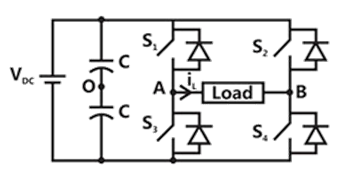
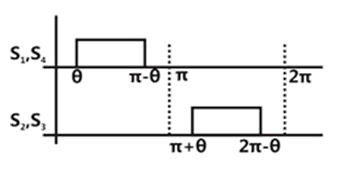
If the load current is sinusoidal and is zero at the node voltage has the waveform


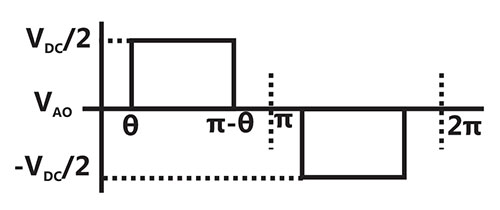
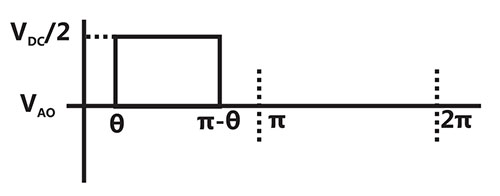
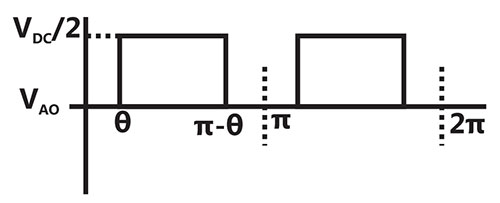
Explanation Locked!
Unlock this branch to view the explanation, track, bookmark and more.
Sign in to UnlockThe Voltage Source Inverter (VSI) shown in the figure below is switched to provide a 50 Hz, square-wave ac output voltage (V₀) across an R-L load. Reference polarity of V₀ and reference direction of the output current i₀ are indicated in the figure. It is given that R=3Ω, L=9.55mH.
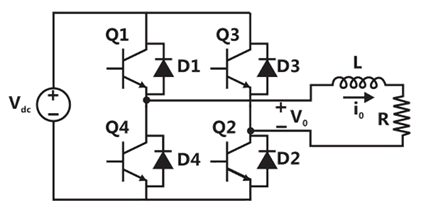
In the interval when V₀<0 and i₀>0 the pair of devices which conducts the load current is
Explanation Locked!
Unlock this branch to view the explanation, track, bookmark and more.
Sign in to UnlockThe Voltage Source Inverter (VSI) shown in the figure below is switched to provide a 50 Hz, square-wave ac output voltage (V₀) across an R-L load. Reference polarity of V₀ and reference direction of the output current i₀ are indicated in the figure. It is given that R=3Ω, L=9.55mH.
Appropriate transition i.e., Zero Voltage Switching (ZVS) /Zero Current Switching (ZCS) of the IGBTs during turn-on/turn-off is
Explanation Locked!
Unlock this branch to view the explanation, track, bookmark and more.
Sign in to UnlockIn the 3-phase inverter circuit shown, the load is balanced and the gating scheme is conduction mode. All the switching devices are ideal.
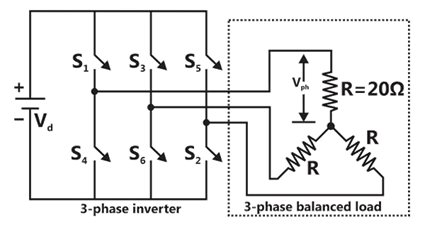
The RMS value of load phase voltage is
Explanation Locked!
Unlock this branch to view the explanation, track, bookmark and more.
Sign in to UnlockIn the 3-phase inverter circuit shown, the load is balanced and the gating scheme is conduction mode. All the switching devices are ideal.
If the dc bus voltage, the power consumed by 3-phase load is

Explanation Locked!
Unlock this branch to view the explanation, track, bookmark and more.
Sign in to UnlockA three-phase current source inverter used for the speed control of an induction motor is to be realized using MOSFET switches as shown below, Switches to are identical switches.


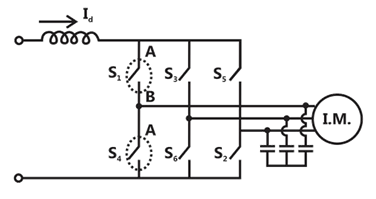
The proper configuration for realizing switches to is
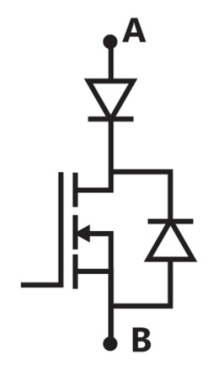
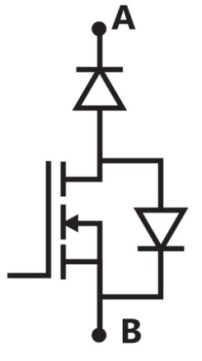
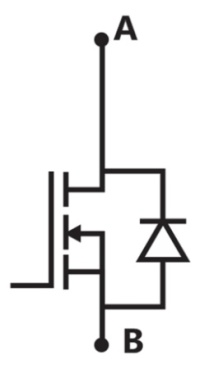
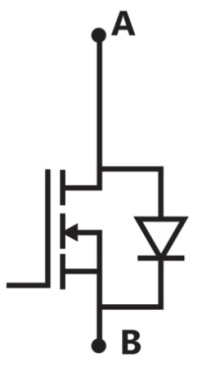
Explanation Locked!
Unlock this branch to view the explanation, track, bookmark and more.
Sign in to UnlockThe Current Source Inverter shown in figure is operated by alternately turning on thyristor pairs and . If the load is purely resistive, the theoretical maximum output frequency obtainable will be


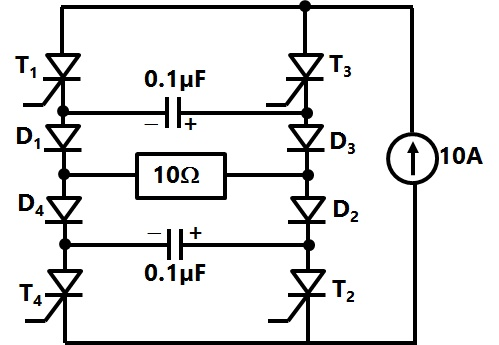
Explanation Locked!
Unlock this branch to view the explanation, track, bookmark and more.
Sign in to UnlockA 3-phase Voltage Source Inverter is operated in 180° conduction mode. Which one of the following statements is true?
Both pole-voltage and line-voltage will have harmonic components
Pole-voltage will have 3rd harmonic component but line-voltage will be free from 3rd harmonic
Line-voltage will have 3rd harmonic component but pole-voltage will be free from 3rd harmonic
Both pole-voltage and lone-voltage will be free from 3rd harmonic components
Explanation Locked!
Unlock this branch to view the explanation, track, bookmark and more.
Sign in to UnlockA single phase voltage source inverter is feeding a purely inductive load as shown in the figure.
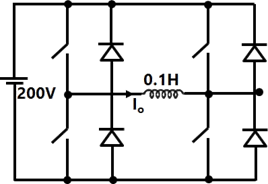
The inverter is operated at 50Hz in 180° square wave mode. Assume that the load current does not have any dc component. The peak value of the inductor current will be

Explanation Locked!
Unlock this branch to view the explanation, track, bookmark and more.
Sign in to Unlock"Six MOSFETs connected in a bridge configuration (having no other power device) MUST be operated as a Voltage Source Inverter (VSI)'". This statement is
Explanation Locked!
Unlock this branch to view the explanation, track, bookmark and more.
Sign in to UnlockA single-phase voltage source inverter is controlled in a single pulse-width modulated mode with a pulse width of 150° in each half cycle. Total harmonic distortion is defined as , where is the RMS value of the fundamental component of the output voltage. The THD of output AC voltage waveform is


Explanation Locked!
Unlock this branch to view the explanation, track, bookmark and more.
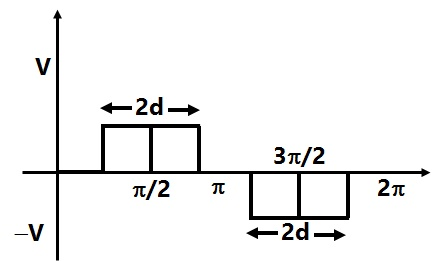
Sign in to UnlockA single phase inverter is operated in PWM mode generating a single-pulse of width 2d in the center of each half cycle as shown in figure. It is found that the output voltage is free from 5th harmonic for pulse width 144°. What will be percentage of 3rd harmonic present in the output voltage?

Explanation Locked!
Unlock this branch to view the explanation, track, bookmark and more.
Sign in to UnlockThe output voltage waveform of a three-phase square-wave inverter contains
Explanation Locked!
Unlock this branch to view the explanation, track, bookmark and more.
Sign in to UnlockAn inverter has a periodic output voltage with the output waveform as shown in Fig. When the conduction angle α=120°, the RMS fundamental component of the output voltage is
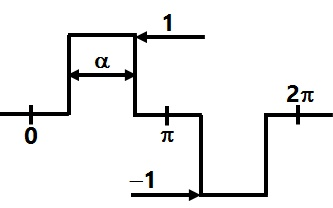
Explanation Locked!
Unlock this branch to view the explanation, track, bookmark and more.
Sign in to UnlockWith reference to the output waveform given in Figure, the output of the converter will be free from 5th harmonic when
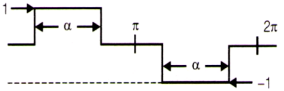




Explanation Locked!
Unlock this branch to view the explanation, track, bookmark and more.
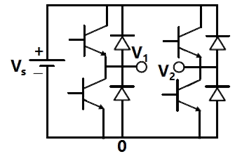
Sign in to UnlockFigure shows an inverter circuit with a dc source voltage. The semiconductor switches of the inverter are operated in such a manner that the pole voltages and are as shown in Figure. What is the RMS value of the pole-to-pole voltage?




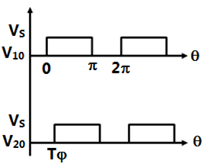




Explanation Locked!
Unlock this branch to view the explanation, track, bookmark and more.
Sign in to UnlockTriangular PWM control, when applied to a three phase, BJT based voltage source inverter, introduces
Explanation Locked!
Unlock this branch to view the explanation, track, bookmark and more.
Sign in to UnlockA three phase voltage source inverter supplies a purely inductive three phase load. Upon Fourier analysis, the output voltage waveform is found to have an n-th order harmonic of magnitude times that of the fundamental frequency component. The load current would then have an n-th order harmonic of magnitude


Zero
times the fundamental frequency component
times the fundamental frequency component

times the fundamental frequency component

Explanation Locked!
Unlock this branch to view the explanation, track, bookmark and more.
Sign in to UnlockA PWM switching scheme is used with a three phase inverter to
Explanation Locked!
Unlock this branch to view the explanation, track, bookmark and more.
Sign in to UnlockA single-phase bridge inverter is fed from a 200V d.c. supply and is operated at 50Hz. It is connected to a load having a resistance of 20 ohms and an inductance of 0.2H. Draw the load current waveform in the steady indicating the peak values.
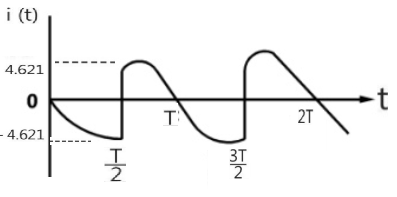
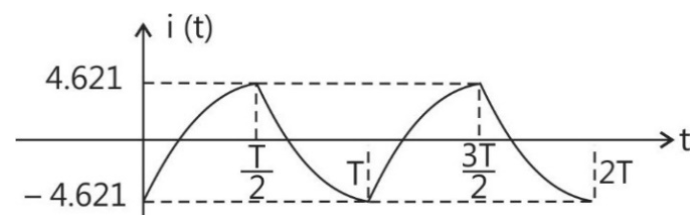
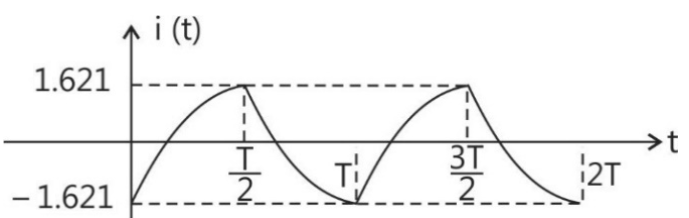
None
Explanation Locked!
Unlock this branch to view the explanation, track, bookmark and more.
Sign in to UnlockAn inverter capable of supplying a balanced three-phase variable voltage variable frequency output is feeding a three-phase induction motor rated for 50Hz and 440V. The stator winding resistances of the motor are negligible small. During starting, the current inrush can be avoided without sacrificing the starting torque by suitably applying:
Explanation Locked!
Unlock this branch to view the explanation, track, bookmark and more.
Sign in to UnlockA single phase inverter with square wave voltage will have in its output waveform a fifth harmonic component equal to ____________________ percentage of the fundamental.
Explanation Locked!
Unlock this branch to view the explanation, track, bookmark and more.
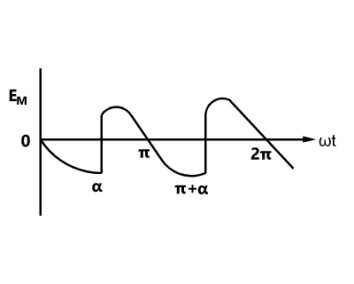
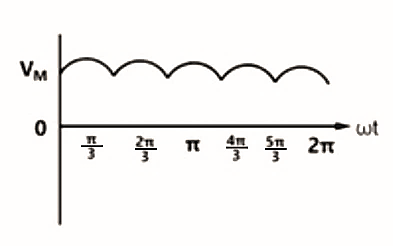
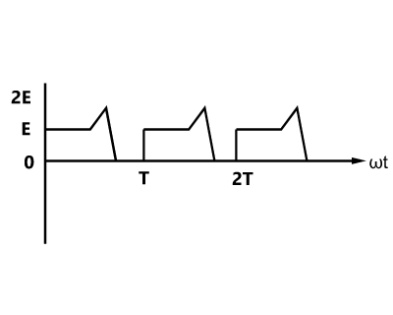
Sign in to UnlockMatch the output wave forms:
(P) Single phase fully controlled ac-dc converter
(Q) Voltage commutated dc-ac chopper (E=input dc Voltage)
(R) Phase voltage of a star connected balanced three-phase load fed from a three-phase inverter with 180° Conduction. (input dc voltage=E)
(S) Line voltage of a six stepped inverter with input dc voltage E
(T) Three-phase diode bridge rectifier
(A)
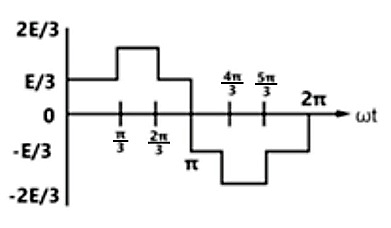
(B)
(C)
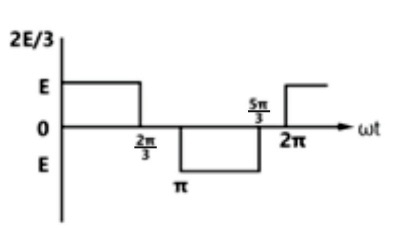
(D)
(E)
Explanation Locked!
Unlock this branch to view the explanation, track, bookmark and more.
Sign in to Unlock