Communication System
Random Variable and Random Process
Practice questions from Random Variable and Random Process.
93
Total0
Attempted0
Correct0
IncorrectConsider a real-valued random process

where and is a positive integer. Here, for and 0 otherwise. The coefficients are pairwise independent, zero-mean unit variance random variables.





Read the following statements about the random process and choose the correct option.
(i) The mean of the process is independent of time .


(ii) The autocorrelation function is independent of time for all .


(Here, is the expectation operation.)

Sign in to see the solution
Log in to view the explanation, track your attempts, and keep your progress.
Sign in to UnlockThe random variable takes values in with probabilities and , where . Let denote the entropy of (in bits), parameterized by . Which of the following statements is/are TRUE?











Sign in to see the solution
Log in to view the explanation, track your attempts, and keep your progress.
Sign in to UnlockA white Gaussian noise with zero mean and power spectral density , when applied to a first-order RC low pass filter produces an output . At a particular time , the variance of the random variable is _________.









Sign in to see the solution
Log in to view the explanation, track your attempts, and keep your progress.
Sign in to UnlockSuppose and are independent and identically distributed random variables that are distributed uniformly in the interval . The probability that is _________.




Sign in to see the solution
Log in to view the explanation, track your attempts, and keep your progress.
Sign in to UnlockLet be a random process, where amplitude and phase are independent of each other, and are uniformly distributed in the intervals and , respectively. is fed to an 8 -bit uniform mid-rise type quantizer. Given that the autocorrelation of is , the signal to quantization noise ratio (in , rounded off to two decimal places) at the output of the quantizer is_________.








Sign in to see the solution
Log in to view the explanation, track your attempts, and keep your progress.
Sign in to UnlockA random variable , distributed normally as , undergoes the transformation , given in the figure. The form of the probability density function of is (In the options given below, are non-zero constants and is piecewise continuous function)






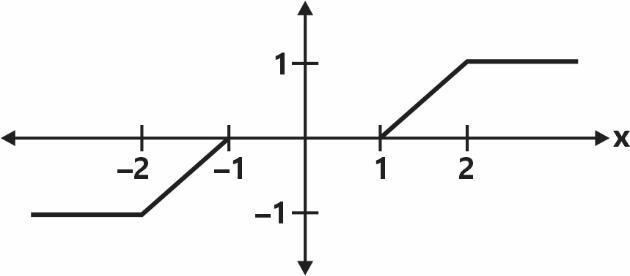




Sign in to see the solution
Log in to view the explanation, track your attempts, and keep your progress.
Sign in to UnlockLet H(X) denote the entropy of a discrete random variable X taking K possible distinct real values. Which of the following statements is/are necessarily true?
bits




Sign in to see the solution
Log in to view the explanation, track your attempts, and keep your progress.
Sign in to UnlockConsider a real valued source whose samples are independent and identically distributed random variables with the probability density function, , as shown in the figure.

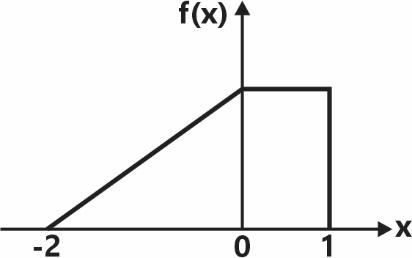
Consider a 1 bit quantizer that maps positive samples to value and others to value . If and are the respective choices for and that minimize the mean square quantization error, then __________(rounded off to two decimal places).





Sign in to see the solution
Log in to view the explanation, track your attempts, and keep your progress.
Sign in to UnlockThe autocorrelation function of a wide-sense stationary random process is shown in the figure.


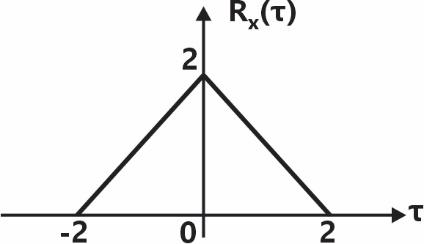
The average power of X(t) is __________.
Sign in to see the solution
Log in to view the explanation, track your attempts, and keep your progress.
Sign in to UnlockThe random variable

where

and is a real white Gaussian noise process with two-sided power spectral density , for all . The variance of is _______.





Sign in to see the solution
Log in to view the explanation, track your attempts, and keep your progress.
Sign in to UnlockA binary random variable takes the value +2 or -2. The probability . The value of (rounded off to one decimal place), for which the entropy of is maximum, is ________.


Sign in to see the solution
Log in to view the explanation, track your attempts, and keep your progress.
Sign in to UnlockLet Z be an exponential random variable with mean 1. That is the cumulative distribution function of Z is given by

Then , rounded off to two decimal places, is equal to ________

Sign in to see the solution
Log in to view the explanation, track your attempts, and keep your progress.
Sign in to UnlockIf X and Y are random variables such that and , then


______

Sign in to see the solution
Log in to view the explanation, track your attempts, and keep your progress.
Sign in to UnlockA single bit, equally likely to be 0 and 1, is to be send across an additive white Gaussian noise (AWGN) channel with power spectral density . Binary signaling, with 0p(t) and 1q(t), is used for the transmission along with an optimal receiver that minimizes the bit-error probability.


Let , from an orthogonal signal set


If we choose and,we would obtain a certain bit error probability.



If we keep , but take, for what value of E would we obtain the same bit-error probability?

Sign in to see the solution
Log in to view the explanation, track your attempts, and keep your progress.
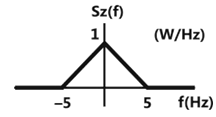
Sign in to UnlockLet a random process Y(t) be described as where X(t) is a white noise process with power spectral density . The filter has a magnitude response given by for , and zero elsewhere, Z(t) is a stationary random process, uncorrelated with X(t) , with power spectral density as shown in the figure. The power in Y(t), in watts, is equal to _______________ W (rounded off to two decimal places).





Sign in to see the solution
Log in to view the explanation, track your attempts, and keep your progress.
Sign in to UnlockA random variable X takes values and with probabilities 0.2 and 0.8, respectively. It is transmitted across a channel which adds noise N, so that the random variable at the channel output is . The noise N is independent of X, and is uniformly distributed over the interval. The receiver makes a decision.





Where the threshold is chosen so as to minimize the probability of error . The minimum probability of error, rounded off to 1 decimal place, is ____________.


Sign in to see the solution
Log in to view the explanation, track your attempts, and keep your progress.
Sign in to UnlockA binary source generates symbols which are transmitted over a noisy channel. The probability of transmitting X = 1 is 0.5. Input to the threshold detector is . The probability density function of the noise N is shown below.



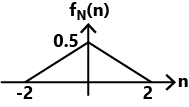
If the detection threshold is zero, then the probability of error (correct to two decimal places) is ______
Sign in to see the solution
Log in to view the explanation, track your attempts, and keep your progress.
Sign in to UnlockLet and be independent normal random variables with zero mean and unit variance. The probability thatis the smallest among the four is _________


Sign in to see the solution
Log in to view the explanation, track your attempts, and keep your progress.
Sign in to UnlockConsider a white Gaussian noise process N(t) with two-sided power spectral density as input to a filter with impulse response (where t is in seconds) resulting in output Y(t). The power Y(t) in watts is


Sign in to see the solution
Log in to view the explanation, track your attempts, and keep your progress.
Sign in to UnlockLet X(t) be a wide sense stationary random process with the power spectral density as shown in Figure (a), where f is in Hertz (Hz). The random process X(t) is input to an ideal lowpass filter with the frequency response as shown in
Figure (b). The output of the lowpass filter is Y(t).


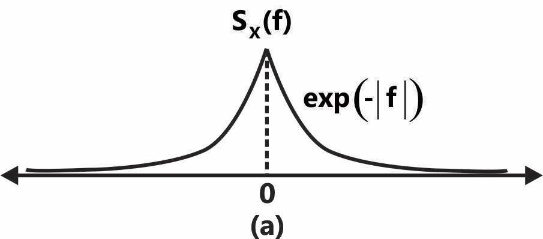
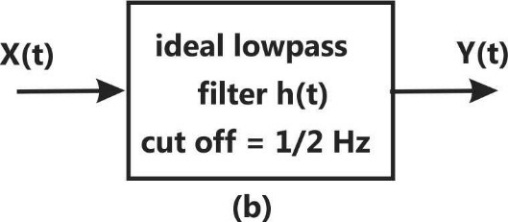
Let E be the expectation operator and consider the following statements:
I. E(X(t)) = E(Y(t))
II.

III.

Select the correct option:
Sign in to see the solution
Log in to view the explanation, track your attempts, and keep your progress.
Sign in to UnlockConsider the random process

where U is a zero-mean Gaussian random variable and V is a random variable uniformly distributed between 0 and 2. Assume that U and V are statistically independent. The mean value of the random process at t = 2 is _____________
Sign in to see the solution
Log in to view the explanation, track your attempts, and keep your progress.
Sign in to UnlockThe second moment of a Poisson-distributed random variable is 2. The mean of the random variable is ___________
Sign in to see the solution
Log in to view the explanation, track your attempts, and keep your progress.
Sign in to UnlockAn analog pulse s(t) is transmitted over an additive white Gaussian noise (AWGN) channel. The received signal is r(t) = S(t) + n(t), where n(t) is additive white Gaussian noise with power spectral density . The received signal is passed through a filter with impulse response h(t). Let and denote the energies of the pulse s(t) and the filter h(t), respectively. When the signal-to-noise ratio (SNR) is maximized at the output of the filter , which of the following holds?








Sign in to see the solution
Log in to view the explanation, track your attempts, and keep your progress.
Sign in to UnlockAn antenna pointing in a certain direction has a noise temperature of 50 K. The ambient temperature is 290 K. The antenna is connected to a pre-amplifier that has a noise figure of 2 dB and an available gain of 40 dB over an effective bandwidth of 12MHz. The effective input noise temperature for the amplifier and the noise power at the output of the preamplifier, respectively, are


and


= 170.8 K and

= 182.5 K and

= 160.62 K and

Sign in to see the solution
Log in to view the explanation, track your attempts, and keep your progress.
Sign in to UnlockAn information source generates a binary sequence . can take one of the two possible values −1 and +1 with equal probability and are statistically independent and identically distributed. This sequence is pre-coded to obtain another sequence , a. The sequence
is used to modulate a pulse g(t) to generate the baseband signal




, where .


If there is a null at in the power spectral density of X(t), then k is ________.

Sign in to see the solution
Log in to view the explanation, track your attempts, and keep your progress.
Sign in to UnlockConsider a random process, where V(t) is a zero mean stationary random process with autocorrelation . The power in X(t) is ________.


Sign in to see the solution
Log in to view the explanation, track your attempts, and keep your progress.
Sign in to UnlockA wide sense stationary random process X(t) passes through the LTI system shown in the figure. If the autocorrelation function of X(t) is , then the autocorrelation function of the output Y(t) is equal to



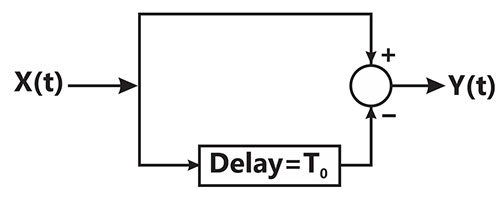




Sign in to see the solution
Log in to view the explanation, track your attempts, and keep your progress.
Sign in to UnlockA voice-grade AWGN (additive white Gaussian noise) telephone channel has a bandwidth of 4.0 kHz and two-sided noise power spectral density watt per Hz. If information at the rate of 52 kbps is to be transmitted over this channel with arbitrarily small bit error rate, then the minimum bit-energy (in mJ/bit) necessary is __________


Sign in to see the solution
Log in to view the explanation, track your attempts, and keep your progress.
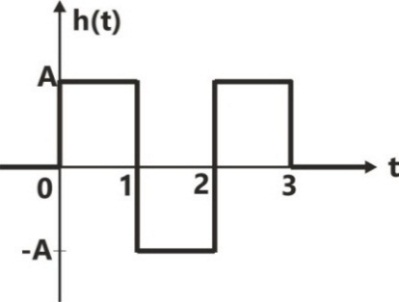
Sign in to UnlockA zero mean white Gaussian noise having power spectral density is passed through an LTI filter whose impulse response h(t) is shown in the figure. The variance of the filtered noise at t = 4 is




Sign in to see the solution
Log in to view the explanation, track your attempts, and keep your progress.
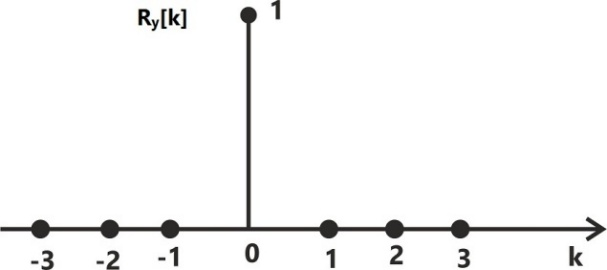
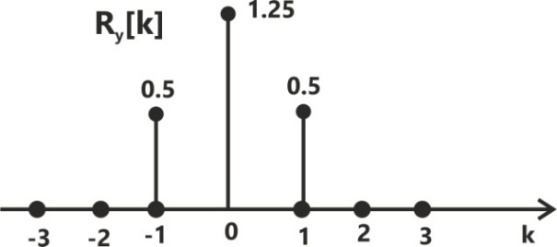
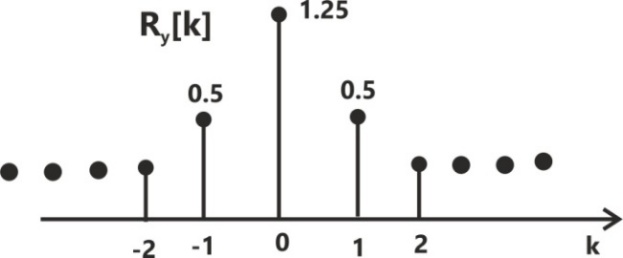
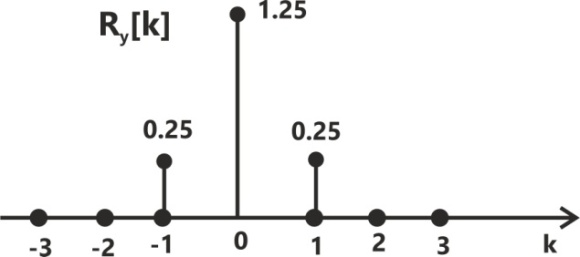
Sign in to Unlockis an independent and identically distributed (i.i.d.) random process with equally likely to be +1 or −1. is another random process obtained as . The autocorrelation function of , denoted by , is





Sign in to see the solution
Log in to view the explanation, track your attempts, and keep your progress.
Sign in to UnlockLet and be two independent binary random variables. If and , then is equal to





pq+(1-p)(1-q
pq
p(1-q)

Sign in to see the solution
Log in to view the explanation, track your attempts, and keep your progress.
Sign in to UnlockLet the random variable X represent the number of times a fair coin needs to be tossed till two consecutive heads appear for the first time. The expectation of X is _______.
Sign in to see the solution
Log in to view the explanation, track your attempts, and keep your progress.
Sign in to UnlockThe variance of the random variable X with probability density functionis _______.

Sign in to see the solution
Log in to view the explanation, track your attempts, and keep your progress.
Sign in to UnlockA random binary wave y(t) is given by
Where, u(t) is the unit step function and ϕ is an independent random variable with uniform distribution in [0,T]. The sequence consists of independent and identically distributed binary valued random variables with



for each n.

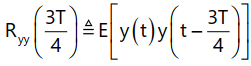
The value of the autocorrelation equals ________.
Sign in to see the solution
Log in to view the explanation, track your attempts, and keep your progress.
Sign in to UnlockA fair die with faces {1, 2, 3, 4, 5, 6} is thrown repeatedly till ‘3’ is observed for the first time. Let X denote the number of times the die is thrown. The expected value of X is ________.
Sign in to see the solution
Log in to view the explanation, track your attempts, and keep your progress.
Sign in to UnlockLet and be independent and identically distributed random variables with the uniform distribution on [0,1].The probability
P{} is _________



Sign in to see the solution
Log in to view the explanation, track your attempts, and keep your progress.
Sign in to UnlockConsider a random process , where the random phase φ is uniformly distributed in the interval [0,2π]. The auto-correlation is






Sign in to see the solution
Log in to view the explanation, track your attempts, and keep your progress.
Sign in to UnlockThe capacity of a band-limited additive white Gaussian noise (AWGN) channel is given by bits per second (bps), where W is the channel bandwidth, P is the average power received and is the one-sided power spectral density of the AWGN.


For a fixed , the channel capacity (in kbps) with infinite bandwidth is approximately


Sign in to see the solution
Log in to view the explanation, track your attempts, and keep your progress.
Sign in to UnlockThe power spectral density of a real stationary random process X(t) is given by
.

The value of the expectation is _____________

Sign in to see the solution
Log in to view the explanation, track your attempts, and keep your progress.
Sign in to UnlockLet X(t) be a wide sense stationary (WSS) random process with power spectral density . If Y(t) is the process defined as Y(t)=X(2t-1), the power spectral density is






Sign in to see the solution
Log in to view the explanation, track your attempts, and keep your progress.
Sign in to UnlockLet , , and be independent and identically distributed random variables with the uniform distribution on [0,1]. The probability is _________.




Sign in to see the solution
Log in to view the explanation, track your attempts, and keep your progress.
Sign in to UnlockA real band-limited random process X(t) has two-sided power spectral density

Where f is the frequency expressed in Hz. The signal X(t) modulates a carrier and the resultant signal is passed through an ideal band-pass filter of
unity gain with centre frequency of 8 kHz and band-width of 2 kHz. The output power (in Watts) is _______.

Sign in to see the solution
Log in to view the explanation, track your attempts, and keep your progress.
Sign in to UnlockIf calls arrive at a telephone exchange such that the time of arrival of any call is independent of the time of arrival of earlier or future calls, the probability distribution function of the total number of calls in a fixed time interval will be
Sign in to see the solution
Log in to view the explanation, track your attempts, and keep your progress.
Sign in to UnlockLet X be a zero mean unit variance Gaussian random variable. is equal to _____.

Sign in to see the solution
Log in to view the explanation, track your attempts, and keep your progress.
Sign in to UnlockConsider a communication scheme where the binary valued signal X satisfies and . The received signal Y = X + Z, where Z is a Gaussian random variable with zero mean and variance . The received signal Y is fed to the threshold detector. The output of the threshold detector X is:


.

To achieve a minimum probability of error , the threshold τ should be

Strictly positive
Zero
Strictly negative
Strictly positive, zero, or strictly negative depending on the nonzero value of
Sign in to see the solution
Log in to view the explanation, track your attempts, and keep your progress.
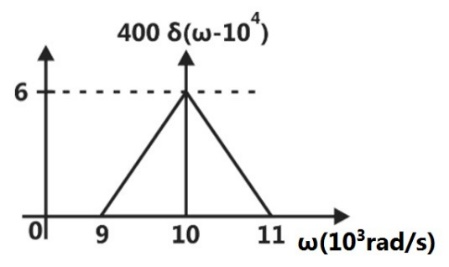
Sign in to UnlockThe power spectral density of a real process X(t) for positive frequencies is shown below. The values of and , respectively, are






Sign in to see the solution
Log in to view the explanation, track your attempts, and keep your progress.
Sign in to UnlockLet U and V be two independent and identically distributed random variables such that. The entropy in bits is



1


Sign in to see the solution
Log in to view the explanation, track your attempts, and keep your progress.
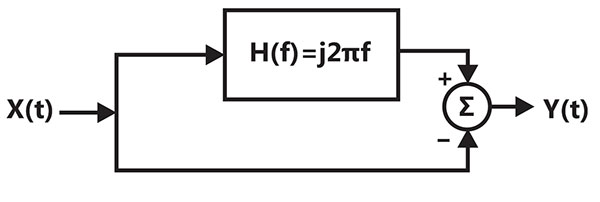
Sign in to UnlockX(t) is a stationary random process with autocorrelation function . This process is passed through the system shown below. The power spectral density of the output process Y(t) is





Sign in to see the solution
Log in to view the explanation, track your attempts, and keep your progress.
Sign in to UnlockX(t) is a stationary process with the power spectral density for all f. The process is passed through a system shown below.

Let be the power spectral density of Y(t). Which one of the following statements is correct?

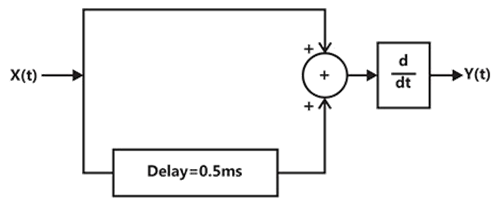
for all f

for


for , , n any integer


for

Sign in to see the solution
Log in to view the explanation, track your attempts, and keep your progress.
Sign in to UnlockA white noise process X(t) with two-sided power spectral density W/Hz is input to a filter whose magnitude squared response is shown below.

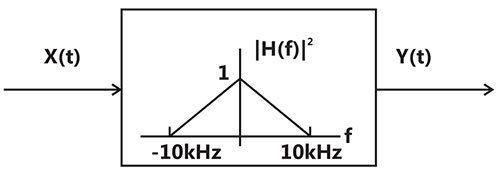
The power of the output process Y(t) is given by




Sign in to see the solution
Log in to view the explanation, track your attempts, and keep your progress.
Sign in to UnlockIf the power spectral density of a stationary random process is a sinc-squared function of frequency, the shape of its autocorrelation is
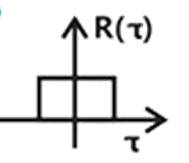
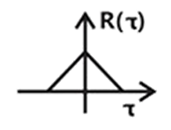
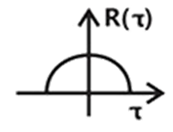
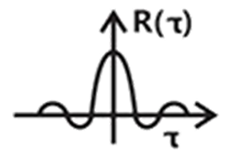
Sign in to see the solution
Log in to view the explanation, track your attempts, and keep your progress.
Sign in to UnlockIf the signal to quantization noise ratio required in uniformly quantizing the signal is 43.5 dB, the step size of the quantization is approximately
Sign in to see the solution
Log in to view the explanation, track your attempts, and keep your progress.
Sign in to UnlockIf the positive values of the signal are uniformly quantized with a step size of 0.05 V, and the negative values are uniformly quantized with a step size of 0.1 V, the resulting signal to quantization noise ratio is approximately
Sign in to see the solution
Log in to view the explanation, track your attempts, and keep your progress.
Sign in to UnlockNoise with double-sided power spectral density of K over all frequencies is passed through a RC low pass filter with 3 dB cut-off frequency of . The noise power at the filter output is

K



Sign in to see the solution
Log in to view the explanation, track your attempts, and keep your progress.
Sign in to UnlockIf R(τ) is the autocorrelation function of a real, wide-sense stationary random process, then which of the following is NOT true?
Sign in to see the solution
Log in to view the explanation, track your attempts, and keep your progress.
Sign in to UnlockIf S(f) is the power spectral density of a real, wide-sense stationary random process, then which of the following is ALWAYS true?
S(0) ≥S(f)

S(-f)=-S(f)

Sign in to see the solution
Log in to view the explanation, track your attempts, and keep your progress.
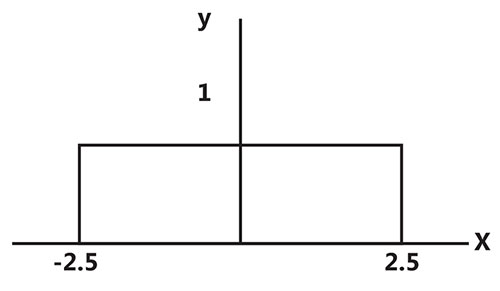
Sign in to UnlockA uniformly distributed random variable X with probability density function

Where u (.) is the unit step function is passed through a transformation given in the figure below. The probability density function of the transformed random Variable Y would be





Sign in to see the solution
Log in to view the explanation, track your attempts, and keep your progress.
Sign in to UnlockA zero-mean white Gaussian noise is passed through an ideal low-pass filter of bandwidth 10 kHz. The output is then uniformly sampled with sampling period msec. The samples so obtained would be

Sign in to see the solution
Log in to view the explanation, track your attempts, and keep your progress.
Sign in to UnlockThe following question refer to wide sense stationary stochastic processes
It is desired to generate a stochastic process (as voltage process) with power spectral density

By driving a Linear-Time-Invariant system by zero mean white noise (as voltage process) with power spectral density being constant equal to 1. The system which can perform the desired task could be:
Sign in to see the solution
Log in to view the explanation, track your attempts, and keep your progress.
Sign in to UnlockThe following question refer to wide sense stationary stochastic processes
It is desired to generate a stochastic process (as voltage process) with power spectral density
By driving a Linear-Time-Invariant system by zero mean white noise (as voltage process) with power spectral density being constant equal to 1.
The parameters of the system obtained would be
First order R-L low-pass filter would have
L = 1H

First order R-C high-pass filter would have C = 0.25F
Tuned L-C filter would have L = 4H C = 4F
Series R-L-C low-pass filter would have ,
L = 4H, C = 4F

Sign in to see the solution
Log in to view the explanation, track your attempts, and keep your progress.
Sign in to UnlockNoise with uniform power spectral density of is passed through a filter followed by an ideal low pass filter of bandwidth B Hz. The output noise power in Watts is






Sign in to see the solution
Log in to view the explanation, track your attempts, and keep your progress.
Sign in to UnlockAn output of a communication channel is a random variable with the probability density function as shown in figure. The mean square value of is

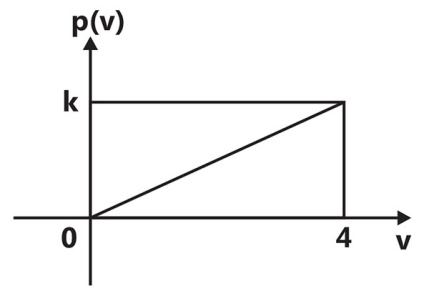
Sign in to see the solution
Log in to view the explanation, track your attempts, and keep your progress.
Sign in to UnlockA 1mW video signal having a bandwidth of 100 MHZ is transmitted to a receiver through a cable that has 40 dB loss. If the effective one-sided noise spectral density at the receiver is , then the signal to noise ratio at the receiver is

Sign in to see the solution
Log in to view the explanation, track your attempts, and keep your progress.
Sign in to UnlockA random variable X with uniform density in the interval 0 to 1 is quantized as follows:
If ,


If ,


Where is the quantized value of X

The root-mean square value of the quantization noise is
Sign in to see the solution
Log in to view the explanation, track your attempts, and keep your progress.
Sign in to UnlockThe noise at the input to an ideal frequency detector is white. The detector is operating above threshold. The power spectral density of the noise at the output is
Sign in to see the solution
Log in to view the explanation, track your attempts, and keep your progress.
Sign in to UnlockLet X and Y be two statistically independent random variables uniformly distributed in the ranges
(-1, 1) and (-2, 1) respectively. Let Z = X + Y. then the probability that is

zero



Sign in to see the solution
Log in to view the explanation, track your attempts, and keep your progress.
Sign in to UnlockX(t) is a random process with a constant mean value of 0 and the autocorrelation function .

Let X be the Gaussian random variable obtained by sampling the process at and let .


The probability that is

1 – Q(0.5)
Q(0.5)


Sign in to see the solution
Log in to view the explanation, track your attempts, and keep your progress.
Sign in to UnlockX(t) is a random process with a constant mean value of 0 and the autocorrelation function .
Let Y and Z be the random variables obtained by sampling X(t) at t = 2 and t = 4 respectively. Let. The variance of W is

Sign in to see the solution
Log in to view the explanation, track your attempts, and keep your progress.
Sign in to UnlockIf the variance of is one-tenth the variance of a stationary zero mean discrete time signal x(n), then the normalized autocorrelation function at k=1 is



Sign in to see the solution
Log in to view the explanation, track your attempts, and keep your progress.
Sign in to UnlockA deterministic signal is passed through a differentiator as shown in Fig.

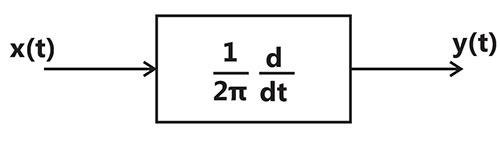
(a) Determine the autocorrelation and the power spectral density .


(b) Find the output power spectral density.

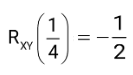
(c) Evaluate and.


(a)


(b)

(c)

(c)
Sign in to see the solution
Log in to view the explanation, track your attempts, and keep your progress.
Sign in to UnlockThe PDF of a Gaussian random variable X is given by . The probability of the event {X = 4} is



0

Sign in to see the solution
Log in to view the explanation, track your attempts, and keep your progress.
Sign in to UnlockDuring transmission over a communication channel, bit errors occur independently with probability p. If a block of n bits is transmitted, the probability of at most one bit error is equal to




Sign in to see the solution
Log in to view the explanation, track your attempts, and keep your progress.
Sign in to UnlockThe PSD and the power of a signal g(t) are, respectively, and . The PSD and the power of the signal ag(t) are, respectively






Sign in to see the solution
Log in to view the explanation, track your attempts, and keep your progress.
Sign in to UnlockThe Hilbert transform of is





Sign in to see the solution
Log in to view the explanation, track your attempts, and keep your progress.
Sign in to UnlockZero mean white Gaussian noise with a two-sided power spectral density of is passed through an ideal low pass filter with a cut-off frequency of 2 KHz and a pass band gain of 1, to produce the noise output n(t).

(a) Obtain the total power in n(t).
(b) Find the autocorrelation function of the noise n(t) as a function of .


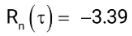
(c) Two noise samples are taken at times and . Find the spacing so that the product has the most negative expected value and obtain this most negative expected value.




(a) Total Power = 16 W
(b)

(c)

(c)
Sign in to see the solution
Log in to view the explanation, track your attempts, and keep your progress.
Sign in to UnlockThe power spectral density (PSD) of a noise process is given by

The noise is passed through a unit-gain ideal band pass filter, centered at 50 MHz and having a bandwidth of 2MHz.
(a) Sketch neatly the PSD of the output noise process.
(b) Determine the output noise power.
(c) Using the band-pass representation for the output noise process, sketch the PSD of the in-phase and Quadrature noise components, and determine their respective powers.
(a)
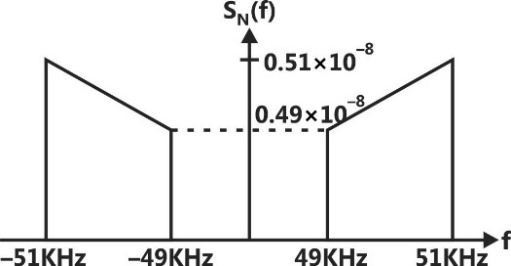
(b) Output noise power = 20 mW
(c)
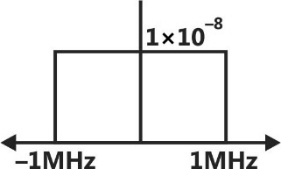
(c) Output power = quad power = inphase power = 20 mW
Sign in to see the solution
Log in to view the explanation, track your attempts, and keep your progress.
Sign in to UnlockThe amplitude spectrum of a Gaussian pulse is
Sign in to see the solution
Log in to view the explanation, track your attempts, and keep your progress.
Sign in to UnlockThe ACF of a rectangular pulse of duration T is
Sign in to see the solution
Log in to view the explanation, track your attempts, and keep your progress.
Sign in to UnlockThe spectral density of a real valued random process has
Sign in to see the solution
Log in to view the explanation, track your attempts, and keep your progress.
Sign in to UnlockThe probability density function of the envelope of narrow band Gaussian noise is
Sign in to see the solution
Log in to view the explanation, track your attempts, and keep your progress.
Sign in to UnlockWhite noise of two-sided spectral density is applied to a simple R-C low pass filter whose 3 dB cut off frequency is 4 kHz. Find the mean squared value of the noise output

Sign in to see the solution
Log in to view the explanation, track your attempts, and keep your progress.
Sign in to UnlockA probability density function is given by . The value of K should be





Sign in to see the solution
Log in to view the explanation, track your attempts, and keep your progress.
Sign in to UnlockThe power spectral density of a deterministic signal given by where f is frequency. The autocorrelation function of this signal in the time domain is

Sign in to see the solution
Log in to view the explanation, track your attempts, and keep your progress.
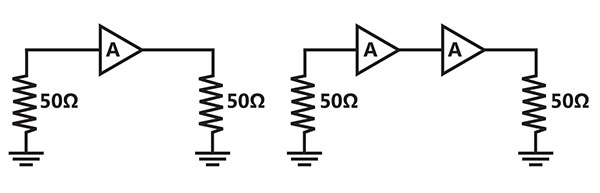
Sign in to UnlockAn amplifier a has 6dB gain and input and output impedances. The noise figure of this amplifier as shown in the figure is (a) is 3 dB. A cascade of two such amplifiers as in the figure will have a noise figure of

Sign in to see the solution
Log in to view the explanation, track your attempts, and keep your progress.
Sign in to UnlockFind the mean of a function , where is a constant and T is a random variable. The PDF of T is given by,

for & 0 for





Sign in to see the solution
Log in to view the explanation, track your attempts, and keep your progress.
Sign in to UnlockThe autocorrelation function of an energy signal has
Sign in to see the solution
Log in to view the explanation, track your attempts, and keep your progress.
Sign in to UnlockFor a narrow band noise with Gaussian quadrature components, the probability density function of its envelope will be
Sign in to see the solution
Log in to view the explanation, track your attempts, and keep your progress.
Sign in to UnlockNoise figure of an amplifier is always greater than 1. (True=1,False=0)
Sign in to see the solution
Log in to view the explanation, track your attempts, and keep your progress.
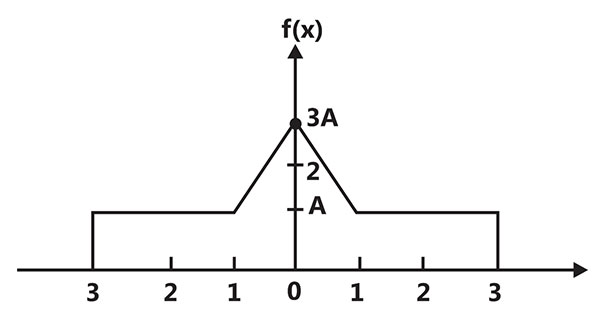
Sign in to UnlockThe function shown in figure can represent a probability density function for A _______
Sign in to see the solution
Log in to view the explanation, track your attempts, and keep your progress.
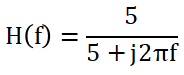
Sign in to UnlockIt is desired to generate a random signal x(t), with autocorrelation function, , by passing white noise n(t), with power spectral density

watt/Hz, through a LTI system. Obtain an expression for the transfer function H(f) of the system.

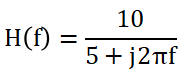
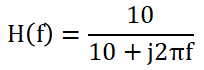
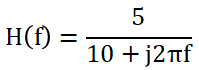
Sign in to see the solution
Log in to view the explanation, track your attempts, and keep your progress.
Sign in to UnlockFor a random variable x following the probability density function, p(x), shown in figure the mean and the variance are, respectively,
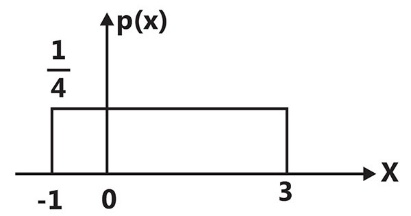
and


1 and

1 and
2 and
Sign in to see the solution
Log in to view the explanation, track your attempts, and keep your progress.
Sign in to UnlockTwo resistors and (in ohms) at temperatures and respectively, are connected in series. Their equivalent noise temperatures is ________ K.




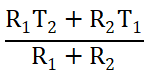
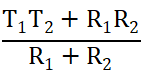
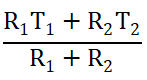
None
Sign in to see the solution
Log in to view the explanation, track your attempts, and keep your progress.
Sign in to Unlock(a) A Gaussian random variable with zero mean and variance is input to a limiter with input output characteristic given by




Determine the probability density function of the output random variable.
(b) A random process X(t) is wide sense stationary. If

Determine the auto correlation function and power spectral density of Y(t) in terms of those of X(t).


(a)

(b)

(b)
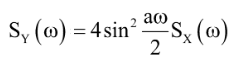
None
Sign in to see the solution
Log in to view the explanation, track your attempts, and keep your progress.
Sign in to Unlock